
WhatsApp API Pricing Changes in 2026: What Businesses Need to Know
From October 1, 2026, WhatsApp is changing how businesses are charged inside the 24-hour customer service window. Service messages get 1,000 free per business phone number each month, then become chargeable. Utility templates sent during an active window will also be chargeable. The window itself stays, and customer-initiated messages remain free. High-volume businesses in e-commerce, automotive, healthcare, education and sales should review which category each automated message falls under.

Admin
September 22, 2026
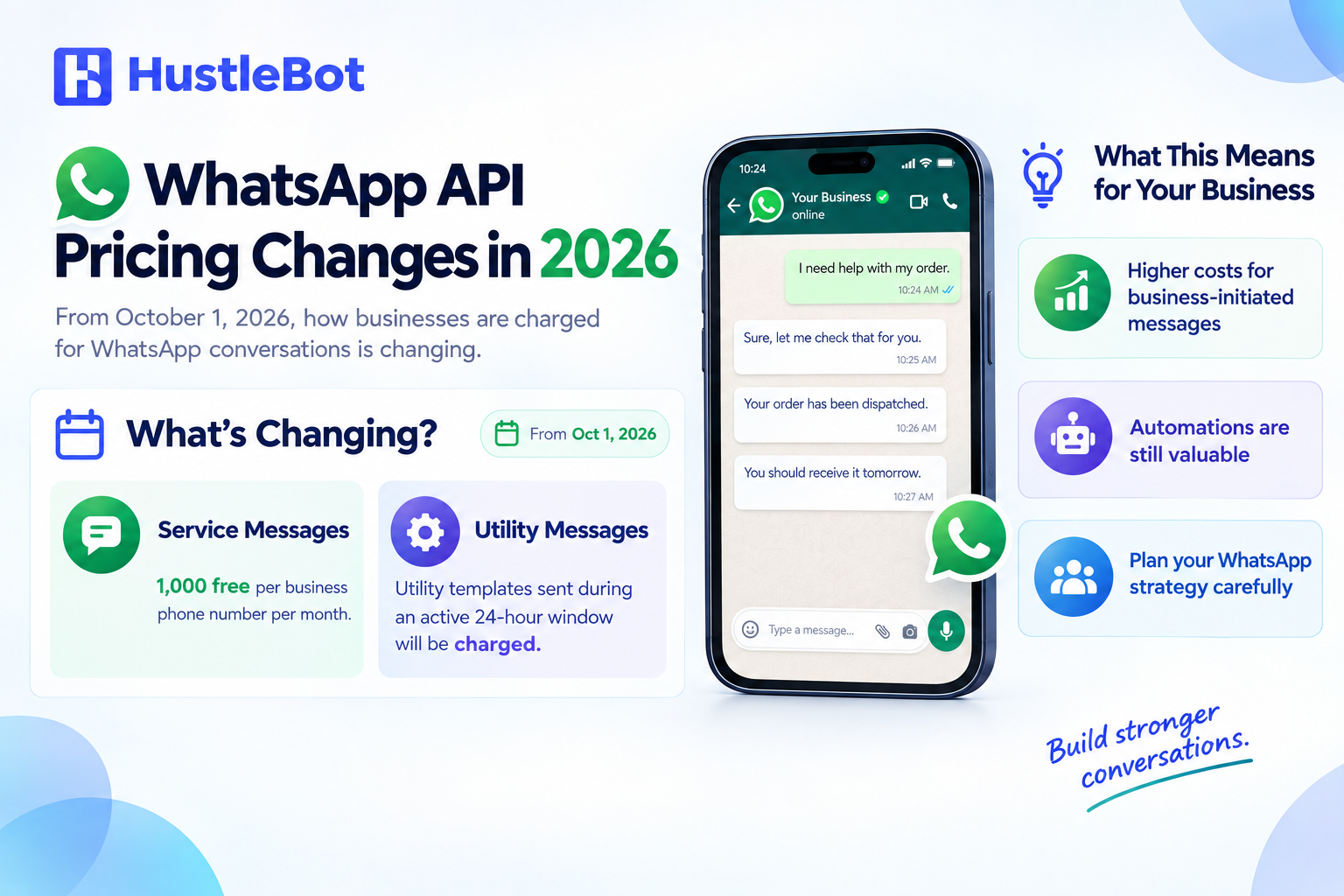
WhatsApp is changing how businesses are charged for conversations from October 1, 2026.
For businesses using WhatsApp API for customer support, automated replies, notifications, and workflows, one of the biggest changes is that sending messages during an active 24-hour customer service window will no longer automatically mean zero messaging charges.
Here’s the simple breakdown.
What’s Changing?
From October 1, 2026, two areas are affected:
Service Messages
Businesses will get 1,000 free service messages per month per business phone number. Once that allowance is used, additional service messages will be charged.
Utility Messages
Utility templates sent during an active 24-hour customer service window will become chargeable.
The 24-hour customer service window itself is not being removed.
Why This Matters
Until now, businesses could take advantage of the 24-hour window to have ongoing customer conversations without messaging charges for service responses.
For example:
Under the previous model, these service responses could be sent without Meta messaging charges while the window was open.
From October 1, service-message usage will be subject to the new rules and monthly allowance.
For businesses handling thousands of WhatsApp conversations, this can change the economics of customer communication.
What About Automated Workflows?
Many businesses now use WhatsApp automation for more than basic customer support.
Automations can include:
- Lead follow-ups
- Order updates
- Payment notifications
- Appointment reminders
- Customer support
- Drip campaigns
- AI-powered conversations
The important point is that the workflow itself isn't what Meta charges for.
The messages delivered through that workflow are what matter.
So a business running a large automated WhatsApp operation needs to understand which category each message falls under.
A Simple Way to Look at the Change
Think of the 24-hour window as a conversation window, not a blanket free-messaging window.
The customer can still start a conversation.
The window still opens.
But certain messages sent by the business during that window will now be subject to Meta's updated pricing rules.
That distinction is important when planning WhatsApp automation.
What Isn't Changing?
A few things remain important:
The 24-hour customer service window remains.
Customer-initiated messages remain free.
Service messages receive a monthly free allowance.
Utility messaging will no longer receive the previous free treatment simply because the 24-hour window is open.
Who Will Feel the Impact Most?
The change is likely to matter most to businesses with high WhatsApp conversation volumes.
For example:
E-commerce
Large numbers of order and delivery conversations.
Automotive
Lead follow-ups, service updates and customer enquiries.
Healthcare
Appointments, reminders and customer communication.
Education
Enquiries, counselling and follow-ups.
Sales Teams
High-volume conversations with prospects.
Customer Support Teams
Large numbers of agent or automated responses.
The more business-initiated messages you send, the more important the new pricing model becomes.
October 1, 2026: The Key Takeaway
WhatsApp isn't removing the 24-hour customer service window.
It's changing what businesses can send within that window without messaging charges.
From October 1:
Service Messages
1,000 free per business phone number each month, followed by applicable charges.
Utility Messages
Chargeable even when sent during an active 24-hour customer service window.
For businesses building their customer communication around WhatsApp, understanding this distinction is becoming increasingly important.
HustleBot helps businesses automate WhatsApp conversations, customer engagement and workflows while keeping communication structured and scalable.
HUSTLEBOT
Smarter WhatsApp Automation